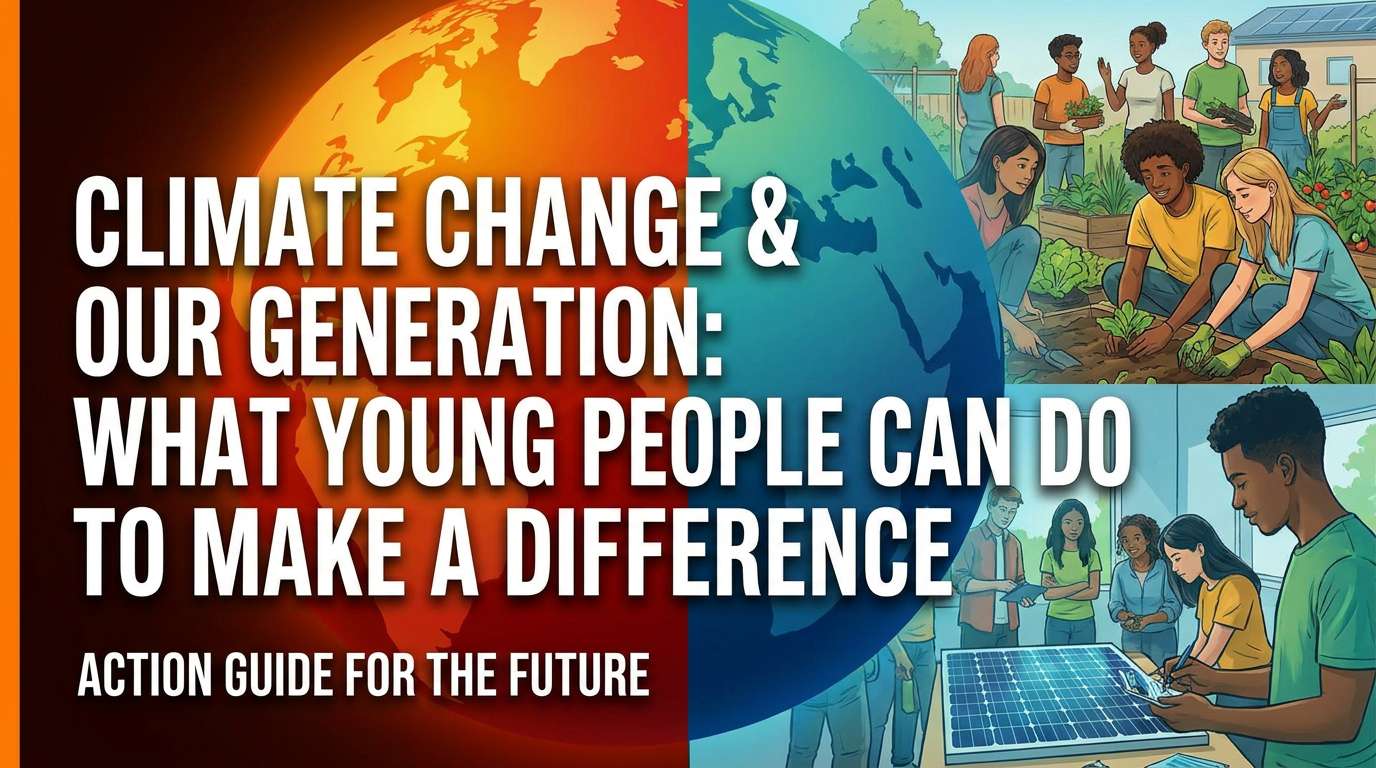
Climate Change and Our Generation: What Young People Can Do to Make a Difference
Introduction
In recent years, the words "climate change" have appeared everywhere — in the news, in classrooms, in political speeches, and on social media. Scientists, world leaders, and young activists alike are sounding the alarm about one of the most urgent challenges humanity has ever faced.
Yet for many young people, climate change can feel overwhelming and distant. The scale of the problem seems enormous, and it is easy to wonder whether one person's actions can make any real difference at all.
The truth is that young people are not powerless. In fact, the choices and actions of this generation will play a crucial role in determining the future of our planet. This article explains what climate change is, why it matters, and what young people can do to help.
What Is Climate Change?
Climate change refers to long-term shifts in global temperatures and weather patterns. While some degree of climate change is natural, scientists have established that human activities since the Industrial Revolution have dramatically accelerated the process.
The primary cause is the burning of fossil fuels — coal, oil, and natural gas — which releases large quantities of carbon dioxide and other greenhouse gases into the atmosphere. These gases trap heat from the sun, causing the Earth's average temperature to rise. This phenomenon is known as global warming.
The consequences of climate change include:
- Rising sea levels that threaten coastal communities.
- More frequent and severe storms, floods, and droughts.
- The destruction of natural habitats and the extinction of species.
- Disruption to food and water supplies.
- Increased health risks from heatwaves and the spread of disease.
Why Should Young People Care?
Climate change is not a problem for the distant future — its effects are already being felt around the world today. Heatwaves are becoming more intense, glaciers are melting at record speeds, and extreme weather events are growing more frequent.
More importantly, it is today's young people who will live with the consequences of decisions being made right now. The actions — or inactions — of this generation and those in power will shape the world that young people inherit.
This is precisely why young voices matter so much in the climate conversation. Teenage activist Greta Thunberg famously reminded world leaders that young people are watching and that they will not accept a future defined by environmental destruction.
What Can Young People Do?
While governments and large corporations bear the greatest responsibility for addressing climate change, individuals — including young people — can take meaningful action in their daily lives.
1. Reduce, Reuse, and Recycle
The amount of waste produced by modern society is staggering. By reducing unnecessary consumption, reusing items where possible, and recycling materials such as paper, plastic, and glass, young people can help reduce the burden on landfills and cut down on pollution.
2. Reduce Energy Use at Home
Simple habits such as turning off lights when leaving a room, unplugging devices that are not in use, and avoiding excessive use of air conditioning or heating can significantly reduce a household's carbon footprint.
3. Choose Sustainable Transport
Whenever possible, walking, cycling, or using public transport instead of travelling by car reduces carbon emissions. These choices also benefit physical health and reduce traffic congestion.
4. Be Mindful of Food Choices
The production of meat — particularly beef — is one of the leading contributors to greenhouse gas emissions. Reducing meat consumption, avoiding food waste, and choosing locally produced food where available are all meaningful steps individuals can take.
5. Educate and Influence Others
One of the most powerful things a young person can do is speak up. Sharing accurate information about climate change with friends, family, and communities can shift attitudes and inspire collective action. Social media, school projects, and community events are all platforms through which young voices can reach wider audiences.
6. Support and Participate in Climate Action
Joining or supporting environmental organisations, participating in peaceful climate marches, and writing to local representatives are all ways in which young people can make their voices heard at a political level. Change at scale requires pressure on those in power, and young people have proven time and again that they are capable of creating that pressure.
Young Climate Leaders Who Are Making a Difference
Around the world, young people are already leading the charge on climate action.
- Greta Thunberg of Sweden began striking outside her country's parliament at the age of fifteen, sparking a global school strike movement that mobilised millions of young people worldwide.
- Vanessa Nakate of Uganda has highlighted the disproportionate impact of climate change on African communities and amplified the voices of young activists from the Global South.
- Licypriya Kangujam of India began advocating for climate legislation at the age of seven and has spoken at international climate summits around the world.
These young leaders demonstrate that age is no barrier to making a meaningful impact.
The Importance of Hope
It would be dishonest to pretend that the climate crisis is not serious. It is. But it is equally important not to give in to despair. Scientists and engineers around the world are developing renewable energy technologies, sustainable agriculture methods, and innovative solutions to reduce carbon emissions.
Progress is possible — but it requires the commitment of individuals, communities, governments, and businesses working together. Young people, with their energy, creativity, and determination, are an essential part of that effort.
Conclusion
Climate change is the defining challenge of our time, and it falls to this generation to respond with urgency, courage, and creativity. While no single person can solve the crisis alone, every action matters — from the choices made in the home to the demands made of those in power.
Young people are not simply the leaders of tomorrow. They are the advocates, the innovators, and the changemakers of today. By taking action now — however small — each young person contributes to a future that is cleaner, fairer, and more sustainable for all.
The planet needs this generation. And this generation is more than capable of rising to the challenge.