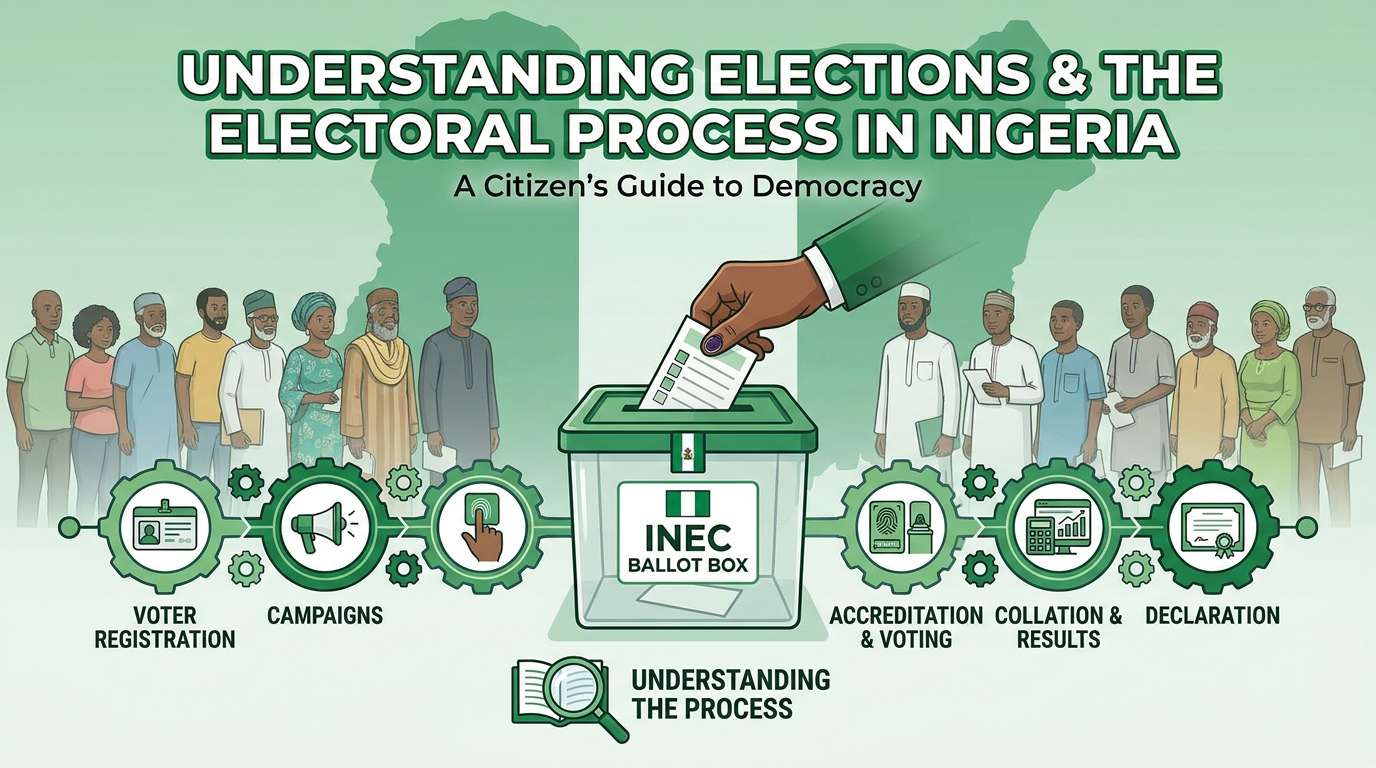
Electoral Systems and the Nigerian Electoral Process
Introduction
Elections are a cornerstone of democratic governance. They provide the mechanism through which citizens choose their leaders and representatives, giving legitimacy to those who hold political power.
An electoral system refers to the set of rules that determine how votes are cast, counted, and translated into seats or offices won. Different countries adopt different electoral systems depending on their political history, structure, and objectives.
In Nigeria, elections are organized and supervised by the Independent National Electoral Commission (INEC), which conducts elections into various political offices at federal, state, and local government levels.
Meaning of an Electoral System
An electoral system is the method by which votes cast by citizens in an election are converted into seats won by candidates or political parties. It defines how elections are structured, conducted, and how winners are determined.
Types of Electoral Systems
1. Majority (First-Past-The-Post) System
Under this system, the candidate with the highest number of votes in a constituency wins the election, regardless of whether they secured an absolute majority (more than 50%) of total votes cast. Nigeria uses this system for most elections.
2. Proportional Representation System
Under this system, seats are allocated to political parties in proportion to the number of votes they receive nationally or within a region, ensuring smaller parties also gain representation.
3. Mixed Electoral System
This combines elements of both the majority and proportional representation systems, with some seats filled through direct constituency elections and others through proportional allocation.
Types of Elections in Nigeria
- Presidential Election: To elect the President and Vice President.
- Gubernatorial Election: To elect Governors and Deputy Governors of states.
- National Assembly Election: To elect Senators and members of the House of Representatives.
- State House of Assembly Election: To elect members of state legislatures.
- Local Government Election: To elect Chairmen and Councillors at the local government level.
The Nigerian Electoral Process
1. Voter Registration
Eligible citizens (Nigerians aged 18 and above) register with INEC to obtain a Permanent Voter Card (PVC), which is required to vote on election day.
2. Party Primaries
Political parties conduct internal primary elections to select their candidates for various political offices ahead of the general election.
3. Nomination of Candidates
Parties formally submit the names of their chosen candidates to INEC within stipulated timeframes.
4. Campaigns
Candidates and parties campaign to persuade voters, presenting their manifestos, policies, and plans for governance through rallies, media, and town hall meetings.
5. Voting (Election Day)
Registered voters go to designated polling units to cast their votes, usually through accreditation with a Permanent Voter Card and biometric verification using devices such as the Bimodal Voter Accreditation System (BVAS).
6. Collation of Results
Votes are counted at the polling unit level, and results are transmitted and collated at ward, local government, state, and national levels.
7. Declaration of Results
INEC officially announces the winners of the election based on the collated results.
8. Resolution of Electoral Disputes
Candidates or parties dissatisfied with election outcomes can challenge results at election tribunals and courts.
Key Institutions in the Nigerian Electoral Process
1. Independent National Electoral Commission (INEC)
The body constitutionally empowered to organize, conduct, and supervise elections into various political offices in Nigeria, as well as register political parties and monitor their activities.
2. Election Tribunals
Special courts set up to hear and resolve disputes arising from elections, such as allegations of rigging, malpractice, or irregularities.
3. Security Agencies
Agencies such as the Nigeria Police Force provide security during elections to prevent violence and ensure a peaceful voting process.
Requirements for Eligibility to Vote
- Must be a citizen of Nigeria.
- Must be at least 18 years of age.
- Must be registered with INEC and possess a Permanent Voter Card.
- Must not be certified as of unsound mind.
- Must not be serving a sentence for an offense involving dishonesty.
Importance of a Credible Electoral Process
- Ensures legitimacy of elected leaders and government.
- Promotes political stability by providing a peaceful means of transferring power.
- Strengthens citizens' trust and confidence in democratic institutions.
- Encourages accountability, since leaders know they can be voted out.
- Provides opportunities for citizens to influence government policies.
Challenges Facing the Nigerian Electoral Process
- Electoral violence and thuggery during campaigns and voting.
- Vote buying and manipulation of voters.
- Logistics challenges, including late arrival of election materials.
- Technical issues with result transmission technology.
- Voter apathy due to distrust in the electoral process.
- Manipulation of results through collation malpractices.
Ways to Improve the Nigerian Electoral Process
- Strengthening the independence and capacity of INEC.
- Improving security during elections to reduce violence.
- Enhancing technology for voter accreditation and result transmission.
- Enforcing strict sanctions against electoral offenses.
- Promoting civic education to increase voter turnout and awareness.
Conclusion
Electoral systems and processes are fundamental to democratic governance, providing the structured means through which citizens choose their leaders. A credible, transparent, and well-organized electoral process, as Nigeria continues to strive for, strengthens democracy, builds public trust, and ensures accountable governance.