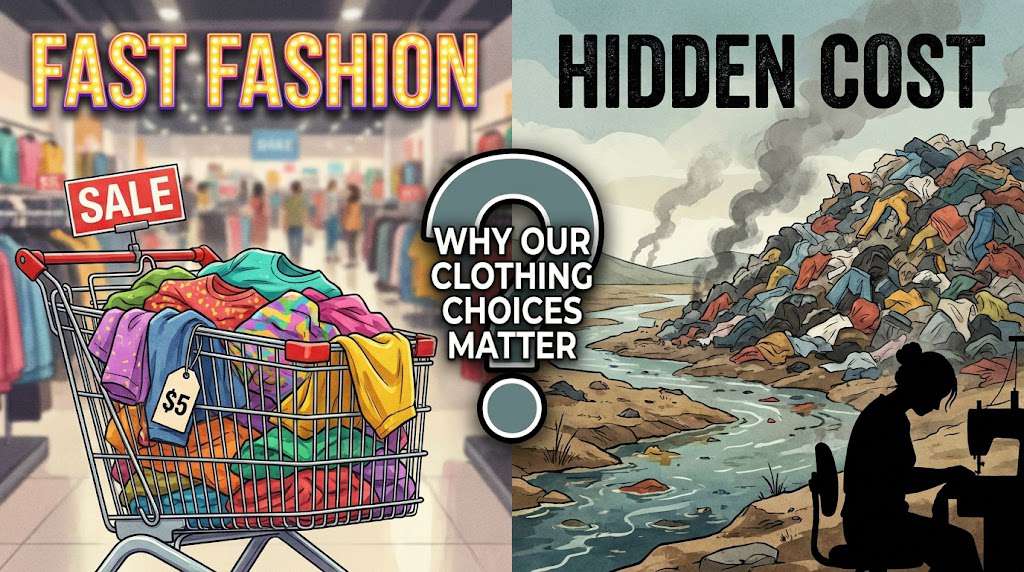
Fast Fashion and Its Hidden Cost: Why Our Clothing Choices Matter
Introduction
Picture the scene. A new collection drops online. Within hours, thousands of items are purchased, worn once for a social media post, and forgotten at the back of a wardrobe. Weeks later, the cycle begins again — new trends, new purchases, new waste. This is the world of fast fashion, and it has become one of the most environmentally and ethically damaging industries on the planet.
Fast fashion refers to the rapid production of large quantities of trendy, inexpensive clothing designed to be worn briefly and discarded quickly. Brands release new collections not twice a year — as was once the norm — but weekly or even daily, encouraging consumers to buy more, spend less, and think little about the consequences of their choices.
For young people who are acutely aware of trends and often operating on limited budgets, fast fashion can seem like an ideal solution. But behind the attractive price tags and eye-catching designs lies a hidden cost — one that is being paid by the environment, by garment workers, and ultimately by all of us.
What Is Fast Fashion?
The term "fast fashion" describes a business model built on the rapid translation of catwalk trends and celebrity styles into affordable garments available in high street stores and online shops within days or weeks. Brands such as Shein, Zara, H&M, and Primark are among the most well-known examples of the fast fashion model.
The key features of fast fashion include:
- Extremely low prices made possible by cheap materials and low-cost labour.
- Rapid production cycles that bring new styles to market within days.
- A vast and constantly changing range of products designed to encourage frequent purchasing.
- Clothing made to lower quality standards, intended to be worn only a few times before disposal.
- Heavy reliance on synthetic materials such as polyester, nylon, and acrylic.
The global fast fashion industry is worth hundreds of billions of dollars and continues to grow rapidly, driven in large part by social media culture and the influence of online content creators.
The Environmental Cost
The environmental impact of fast fashion is staggering. The fashion industry as a whole is one of the world's largest contributors to pollution, water consumption, and greenhouse gas emissions.
Water consumption. The production of a single cotton t-shirt requires approximately two thousand seven hundred litres of water — enough to meet the drinking needs of one person for two and a half years. The textile dyeing process is the second largest polluter of clean water globally, with toxic chemicals frequently discharged into rivers and waterways in producing countries.
Carbon emissions. The fashion industry is responsible for around ten percent of global carbon emissions annually — more than the aviation and shipping industries combined. The energy-intensive processes of manufacturing, transportation, and disposal all contribute to this enormous carbon footprint.
Textile waste. The world produces an estimated ninety-two million tonnes of textile waste every year. Much of this ends up in landfill sites, where synthetic fabrics can take hundreds of years to decompose. Some unsold or discarded clothing is incinerated, releasing toxic gases into the atmosphere.
Microplastic pollution. Every time a garment made from synthetic fibres is washed, it releases thousands of tiny plastic particles — known as microfibres — into the water supply. These particles are too small to be captured by most water filtration systems and end up in oceans, rivers, and ultimately in the food chain.
The Human Cost
The environmental damage caused by fast fashion is matched by the human suffering embedded in its supply chains. The low prices that make fast fashion accessible to consumers in wealthy countries are made possible largely through the exploitation of workers in lower-income nations.
The majority of the world's garments are produced in countries such as Bangladesh, Cambodia, Vietnam, and Ethiopia, where labour costs are extremely low and workers' rights protections are often inadequate. Garment workers — the vast majority of whom are women — frequently endure:
- Extremely low wages that are insufficient to meet basic living costs.
- Excessively long working hours with little or no overtime pay.
- Unsafe and unhealthy working conditions.
- Verbal abuse, harassment, and intimidation from supervisors.
- A lack of job security and the constant threat of dismissal.
The devastating consequences of these conditions were brought into sharp focus in April 2013, when the Rana Plaza garment factory complex in Bangladesh collapsed, killing over one thousand one hundred workers and injuring thousands more. The building had shown visible signs of structural damage, yet workers were ordered to continue working. The tragedy sparked global outrage and renewed scrutiny of the fast fashion industry's supply chains — but meaningful change has been slow to follow.
The Role of Social Media
Social media has played a significant role in accelerating the growth of fast fashion. Platforms such as Instagram, TikTok, and YouTube have created a culture in which outfit repetition is seen as undesirable, new purchases are celebrated through "haul" videos, and the pressure to keep up with constantly shifting trends is relentless.
The rise of ultra-fast fashion brands such as Shein — which adds thousands of new products to its website every single day — has been driven in large part by influencer marketing and the social media algorithm's appetite for novelty and consumption.
Yet social media has also proven to be a powerful tool for those seeking to challenge fast fashion culture. Environmental activists, sustainable fashion advocates, and ethical consumers have used the same platforms to raise awareness, share alternatives, and hold brands accountable for their practices.
What Can Young People Do?
The scale of the fast fashion problem can feel overwhelming, but individual choices do matter — particularly when they are made collectively and accompanied by broader advocacy for systemic change.
Buy less and choose well.
The most effective thing any consumer can do is simply buy fewer items of higher quality. Investing in well-made garments that will last for years rather than weeks reduces waste, saves money in the long run, and sends a clear market signal to brands about consumer priorities.
Shop secondhand.
Thrift stores, charity shops, vintage markets, and online resale platforms such as Depop and Vinted offer a vast range of clothing at affordable prices while giving existing garments a second life and diverting them from landfill. Secondhand shopping has grown significantly in popularity among young people in recent years and is increasingly seen as both stylish and responsible.
Care for your clothes.
Washing clothes at lower temperatures, air-drying rather than tumble-drying, and repairing minor damage rather than discarding garments all significantly extend the lifespan of clothing and reduce its environmental impact.
Research brands before you buy.
A growing number of resources and apps — such as Good On You — allow consumers to check the ethical and environmental credentials of fashion brands before making a purchase. Choosing to support brands with transparent, responsible supply chains sends a powerful message to the industry.
Speak up and advocate for change.
Individual consumer choices, while important, are not sufficient on their own to transform an industry of this scale. Advocating for stronger government regulation of fashion supply chains, supporting organisations working on garment workers' rights, and using social media to challenge fast fashion culture all contribute to the broader movement for a more sustainable and just fashion industry.
The Rise of Sustainable Fashion
Encouragingly, a growing movement of designers, brands, and consumers is pushing back against the fast fashion model and reimagining what the fashion industry could look like.
Sustainable fashion brands prioritise ethical sourcing, fair wages, environmentally responsible production methods, and durable quality over disposable cheapness. Concepts such as circular fashion — in which garments are designed to be repaired, repurposed, or recycled rather than discarded — are gaining traction as both a philosophical and a practical alternative to the throwaway culture of fast fashion.
While sustainable fashion brands often carry higher price tags than their fast fashion counterparts, the growing availability of secondhand clothing, clothing rental services, and clothing swap events means that ethical fashion choices are increasingly accessible to people across a range of budgets.
Conclusion
The clothes we wear are never just clothes. They are the product of complex global supply chains involving the labour of millions of workers, the consumption of vast natural resources, and the generation of enormous quantities of waste. Every purchase we make is a choice that carries consequences — for the environment, for the people who make our clothes, and for the kind of world we are collectively building.
Fast fashion has made clothing cheaper and more abundant than at any point in human history. But the true cost of that abundance — hidden in polluted rivers, collapsing factories, and overflowing landfill sites — is one that the planet and its most vulnerable people can no longer afford to pay.
Young people, as both consumers and citizens, have the power to drive change. By making more conscious choices about what we buy, how we care for it, and how we dispose of it — and by demanding better from the industry as a whole — we can begin to build a fashion future that is fairer, cleaner, and more sustainable for everyone.