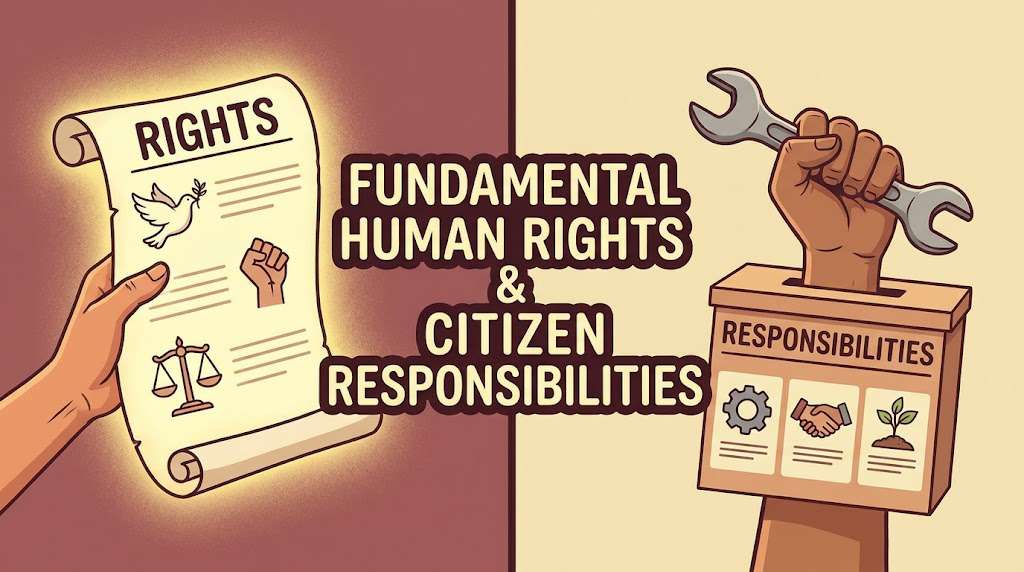
Fundamental Human Rights and Responsibilities of Citizens
Introduction
Every individual deserves to be treated with dignity, fairness, and respect. To protect people from oppression, discrimination, and injustice, societies establish certain basic rights that every citizen is entitled to enjoy. These rights are known as Fundamental Human Rights.
Human rights are essential for freedom, equality, justice, and peaceful coexistence. However, rights come with responsibilities. Citizens are expected to respect the rights of others and contribute positively to the development of their communities and nation.
Understanding human rights and civic responsibilities helps individuals become responsible citizens who actively participate in building a democratic and peaceful society.
What Are Human Rights?
Human rights are basic freedoms and privileges that belong to every person simply because they are human beings.
These rights are universal, meaning they apply to everyone regardless of race, gender, religion, ethnicity, language, nationality, or social status.
Meaning of Fundamental Human Rights
Fundamental Human Rights are rights recognized and protected by the Constitution and other laws of a country. They are considered essential for the development, dignity, and freedom of individuals.
In Nigeria, Fundamental Human Rights are guaranteed under Chapter IV of the Constitution of the Federal Republic of Nigeria.
Characteristics of Human Rights
- They are universal.
- They belong to all human beings.
- They are protected by law.
- They promote human dignity.
- They cannot be arbitrarily taken away.
- They apply equally to all citizens.
Importance of Human Rights
Human rights are important because they:
- Protect individuals from abuse and oppression.
- Promote justice and equality.
- Encourage peaceful coexistence.
- Support democratic governance.
- Promote human dignity and freedom.
- Provide legal protection for citizens.
Major Fundamental Human Rights in Nigeria
1. Right to Life
Every individual has the right to live and should not be unlawfully deprived of life.
This right protects citizens from unlawful killing and violence.
2. Right to Personal Liberty
Citizens have the right to freedom from unlawful arrest, detention, or imprisonment.
Individuals can only be deprived of liberty according to lawful procedures.
3. Right to Fair Hearing
Every person accused of an offence has the right to be heard by an impartial court before judgment is passed.
This principle ensures justice and prevents wrongful punishment.
4. Right to Human Dignity
Every individual deserves respect and protection from degrading treatment, torture, slavery, and inhuman punishment.
5. Right to Freedom of Expression
Citizens have the freedom to express opinions, share ideas, and seek information within the limits of the law.
Freedom of expression supports democracy and informed public participation.
6. Right to Freedom of Association
Individuals have the right to join associations, organizations, clubs, trade unions, and political parties.
7. Right to Freedom of Religion
Every person has the right to practice, change, or promote a religion of their choice.
No citizen should be forced to adopt a particular religion.
8. Right to Freedom of Movement
Citizens have the right to move freely within the country and reside in any part of it.
9. Right to Privacy
Citizens have the right to privacy regarding their homes, communications, family life, and personal information.
10. Right to Freedom from Discrimination
Every citizen should be treated equally regardless of ethnicity, religion, gender, language, social status, or political opinion.
Limitations of Human Rights
Although human rights are important, they are not absolute. Certain restrictions may apply in situations involving:
- National security.
- Public safety.
- Public health.
- Public morality.
- Protection of the rights of others.
Citizens must exercise their rights responsibly and within the provisions of the law.
Meaning of Citizenship
Citizenship refers to the legal status of belonging to a particular country and enjoying the rights and privileges associated with that membership.
Citizens also have obligations and duties toward their nation.
Responsibilities of Citizens
Rights and responsibilities go hand in hand. Responsible citizenship contributes to national development and social stability.
1. Obeying Laws
Every citizen is expected to obey the laws of the country and respect lawful authority.
2. Paying Taxes
Taxes provide revenue that governments use to fund public services and development projects.
3. Voting During Elections
Citizens should participate in elections to choose competent leaders and strengthen democracy.
4. Respecting National Symbols
National symbols such as the flag, anthem, and coat of arms should be respected.
5. Protecting Public Property
Citizens should safeguard public facilities such as schools, roads, hospitals, and government buildings.
6. Promoting Peace and Unity
Individuals should avoid violence, discrimination, and actions that may threaten national unity.
7. Reporting Crimes
Citizens should cooperate with security agencies by reporting criminal activities.
8. Participating in Community Development
Active participation in community projects contributes to local and national development.
Civic Participation
Civic participation refers to the involvement of citizens in activities that improve society and influence public affairs.
Examples of Civic Participation
- Voting during elections.
- Attending community meetings.
- Volunteering for social causes.
- Joining civic organizations.
- Advocating for positive change.
Importance of Civic Participation
- Strengthens democracy.
- Promotes accountability.
- Encourages good governance.
- Supports community development.
- Protects citizens' interests.
Human Rights Violations
Human rights violations occur when individuals or institutions deny people the rights they are entitled to enjoy.
Examples
- Unlawful arrest.
- Torture.
- Discrimination.
- Human trafficking.
- Suppression of free speech.
- Child labor.
How Human Rights Can Be Protected
- Effective law enforcement.
- Independent judiciary.
- Human rights education.
- Free and responsible media.
- Strong democratic institutions.
- Active civil society organizations.
Benefits of Respecting Human Rights
- Peaceful coexistence.
- Social justice.
- Economic development.
- Political stability.
- National unity.
- Respect for human dignity.
Common Examination Questions
- Define human rights.
- What are fundamental human rights?
- List five fundamental human rights.
- Explain the right to fair hearing.
- State five responsibilities of citizens.
- Define civic participation.
- List four benefits of human rights.
- Explain how human rights can be protected.
Summary
- Human rights are basic freedoms enjoyed by all individuals.
- Fundamental human rights are protected by the Constitution.
- Citizens enjoy rights such as life, liberty, fair hearing, and freedom of expression.
- Citizens also have responsibilities including obeying laws, paying taxes, and voting.
- Civic participation strengthens democracy and promotes development.
- Respect for human rights contributes to peace, justice, and national progress.
Conclusion
Fundamental human rights are essential for protecting human dignity, promoting justice, and ensuring freedom in society. At the same time, citizens have responsibilities that help maintain peace, order, and development. A society where rights are respected and citizens fulfill their responsibilities is more likely to experience stability, prosperity, and democratic growth. Understanding and practicing these principles is a key part of becoming a responsible and active citizen.