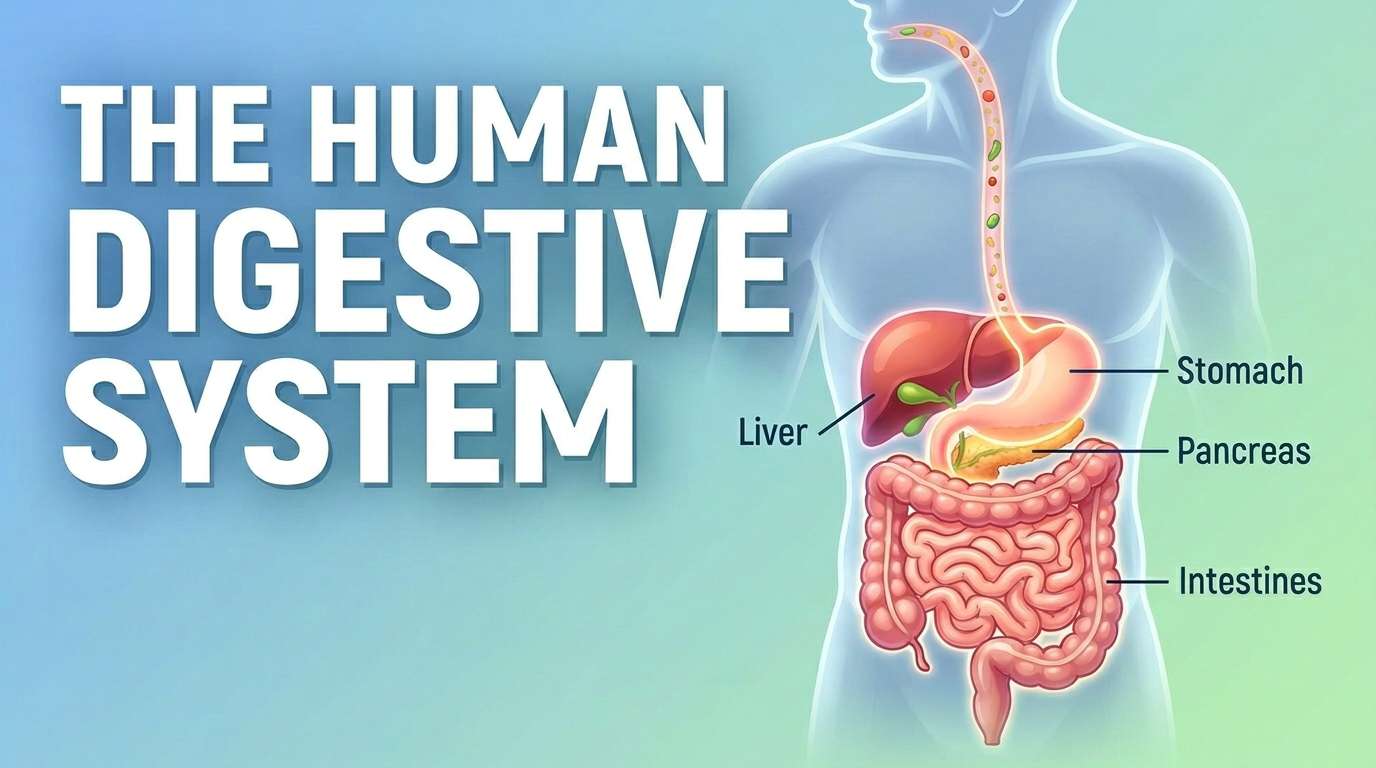
The Human Digestive System Explained
Introduction
Every living organism requires food to survive, grow, repair damaged tissues, and produce energy. However, the food we eat cannot be used directly by the body. It must first be broken down into simpler substances that can be absorbed and transported to various parts of the body.
The digestive system is responsible for this important process. It consists of a group of organs that work together to break down food, absorb nutrients, and eliminate waste materials.
Understanding the digestive system helps students appreciate how the body obtains energy and nutrients necessary for life.
What Is Digestion?
Digestion is the process by which complex food substances are broken down into simpler, soluble molecules that can be absorbed into the bloodstream and utilized by the body.
Digestion involves both physical and chemical processes.
Mechanical Digestion
Mechanical digestion refers to the physical breakdown of food into smaller pieces without changing its chemical composition.
Examples include:
- Chewing food with teeth.
- Churning of food in the stomach.
Chemical Digestion
Chemical digestion involves the use of enzymes and digestive juices to break food into simpler chemical substances.
Main Functions of the Digestive System
- Ingestion of food.
- Digestion of food.
- Absorption of nutrients.
- Transportation of nutrients.
- Removal of waste products.
Major Organs of the Digestive System
The digestive system consists of the alimentary canal and several accessory organs.
The Alimentary Canal
- Mouth
- Pharynx
- Esophagus
- Stomach
- Small Intestine
- Large Intestine
- Rectum
- Anus
Accessory Organs
- Salivary glands
- Liver
- Gall bladder
- Pancreas
The Journey of Food Through the Digestive System
1. Mouth
Digestion begins in the mouth. The teeth cut, tear, and grind food into smaller particles.
Saliva produced by the salivary glands contains an enzyme called amylase, which begins the digestion of starch.
Functions of the Mouth
- Receives food.
- Chews food into smaller pieces.
- Mixes food with saliva.
- Initiates carbohydrate digestion.
2. Pharynx
The pharynx, commonly called the throat, serves as a passageway for food and air.
During swallowing, food moves from the mouth into the esophagus through the pharynx.
3. Esophagus
The esophagus is a muscular tube that connects the throat to the stomach.
Food is pushed along the esophagus by rhythmic muscular contractions called peristalsis.
Peristalsis
Peristalsis is the wave-like contraction and relaxation of muscles that moves food through the digestive tract.
4. Stomach
The stomach is a muscular sac where food is temporarily stored and mixed with gastric juice.
Gastric juice contains:
- Hydrochloric acid (HCl)
- Pepsin enzyme
- Mucus
Functions of the Stomach
- Stores food temporarily.
- Mixes food with digestive juices.
- Begins protein digestion.
- Kills harmful microorganisms.
5. Small Intestine
The small intestine is the longest part of the digestive tract and is the primary site of digestion and nutrient absorption.
It consists of:
- Duodenum
- Jejunum
- Ileum
Functions of the Small Intestine
- Completes digestion.
- Absorbs nutrients.
- Receives enzymes from the pancreas.
- Receives bile from the liver.
Role of Villi
The inner wall of the small intestine contains tiny finger-like projections called villi.
Villi increase the surface area available for nutrient absorption.
6. Liver
The liver is the largest internal organ in the body.
It produces bile, which helps break down fats into smaller droplets.
Functions of the Liver
- Produces bile.
- Stores glycogen.
- Detoxifies harmful substances.
- Processes nutrients.
7. Gall Bladder
The gall bladder stores and concentrates bile produced by the liver.
During digestion, bile is released into the small intestine.
8. Pancreas
The pancreas produces digestive enzymes that help digest proteins, carbohydrates, and fats.
It also produces hormones such as insulin.
9. Large Intestine
The large intestine absorbs water and mineral salts from undigested food materials.
It consists of:
- Cecum
- Colon
- Rectum
Functions of the Large Intestine
- Absorbs water.
- Forms feces.
- Stores waste materials temporarily.
10. Rectum and Anus
The rectum stores feces before elimination through the anus.
The anus controls the release of waste materials from the body.
Digestive Enzymes and Their Functions
| Enzyme | Food Digested | Product |
|---|---|---|
| Amylase | Starch | Simple sugars |
| Pepsin | Protein | Peptides |
| Lipase | Fats | Fatty acids and glycerol |
Importance of Digestion
- Provides energy for body activities.
- Supports growth and development.
- Repairs damaged tissues.
- Maintains good health.
- Supports body functions.
Common Digestive Disorders
Indigestion
A condition in which food is not properly digested, causing discomfort.
Diarrhea
Frequent passage of watery stools.
Constipation
Difficulty in passing stools.
Peptic Ulcer
Sores that develop in the lining of the stomach.
Maintaining a Healthy Digestive System
- Eat a balanced diet.
- Drink sufficient water.
- Exercise regularly.
- Practice proper hygiene.
- Avoid excessive junk food.
- Consume fruits and vegetables regularly.
Common Examination Questions
- Define digestion.
- Differentiate between mechanical and chemical digestion.
- State the functions of the stomach.
- Explain the role of villi.
- List four functions of the liver.
Summary
- Digestion breaks food into absorbable nutrients.
- The digestive system consists of several specialized organs.
- The small intestine is the major site of nutrient absorption.
- The liver, pancreas, and gall bladder support digestion.
- A healthy digestive system is essential for overall health.
Conclusion
The digestive system is one of the most important systems in the human body. It ensures that food is broken down, nutrients are absorbed, and waste materials are removed efficiently. Understanding the structure and functions of the digestive system helps students appreciate how the body obtains energy and maintains life.