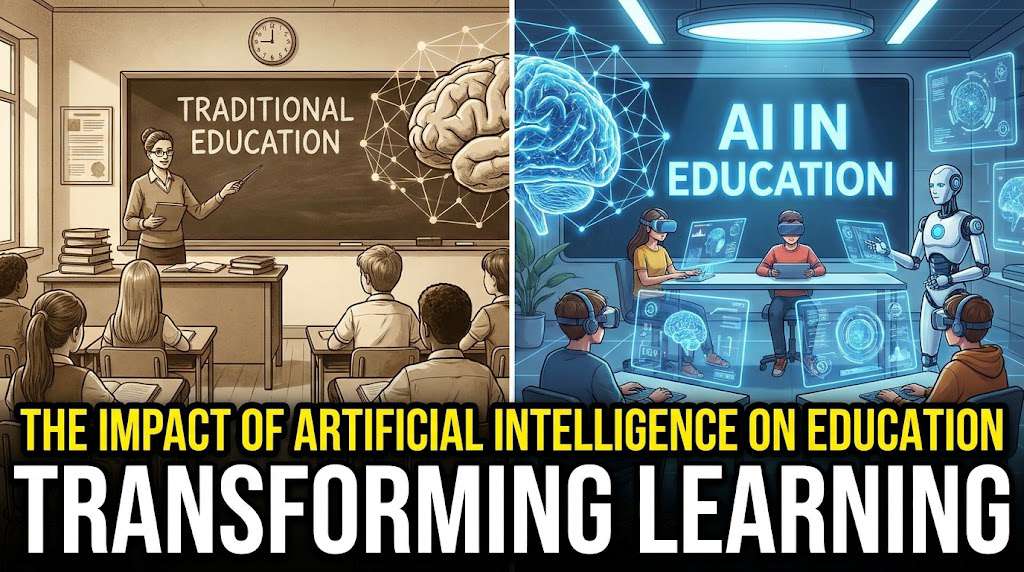
The Impact of Artificial Intelligence on Education
Introduction
Artificial Intelligence (AI) is one of the most significant technological developments of the 21st century. It is transforming industries, improving productivity, and changing how people live, work, and learn. In the field of education, AI is creating new opportunities for personalized learning, intelligent tutoring, automated assessment, and improved access to educational resources.
Students today are growing up in a world where AI-powered tools are becoming increasingly common. Search engines, virtual assistants, recommendation systems, translation software, and educational applications all use artificial intelligence to provide better services.
Understanding AI and its role in education is essential because it is likely to become an even more important part of learning and professional life in the future.
What Is Artificial Intelligence?
Artificial Intelligence refers to the ability of computer systems to perform tasks that normally require human intelligence.
These tasks include learning, reasoning, problem-solving, understanding language, recognizing patterns, making decisions, and adapting to new information.
Simple Definition
Artificial Intelligence is the simulation of human intelligence by machines and computer systems.
History of Artificial Intelligence
The concept of intelligent machines has existed for many decades, but modern AI began to develop significantly in the mid-20th century.
Major Milestones
- 1950 – Early AI concepts were proposed.
- 1956 – The term "Artificial Intelligence" was officially introduced.
- 1997 – A computer defeated a world chess champion.
- 2010s – Rapid growth in machine learning and data science.
- 2020s – Widespread use of AI tools in education, healthcare, business, and communication.
How Artificial Intelligence Works
AI systems learn from large amounts of data and use algorithms to identify patterns, make predictions, and perform tasks.
Key Components of AI
- Data collection.
- Machine learning algorithms.
- Pattern recognition.
- Decision-making systems.
- Continuous improvement through learning.
Types of Artificial Intelligence
1. Narrow AI
Narrow AI is designed to perform specific tasks.
Examples include:
- Voice assistants.
- Translation software.
- Recommendation systems.
- Facial recognition systems.
2. General AI
General AI refers to a theoretical system capable of performing any intellectual task that a human can perform.
Such systems have not yet been fully developed.
Applications of AI in Education
Artificial Intelligence is increasingly being integrated into educational systems worldwide.
1. Personalized Learning
AI can adapt lessons to meet the learning needs of individual students.
Students who need additional support can receive extra practice, while advanced learners can move ahead at their own pace.
Benefits of Personalized Learning
- Improved understanding.
- Better engagement.
- Customized learning experiences.
- Increased academic performance.
2. Intelligent Tutoring Systems
AI-powered tutors can provide explanations, answer questions, and guide students through learning activities.
These systems are available at any time, providing support beyond classroom hours.
3. Automated Assessment
AI can assist teachers by grading quizzes, assignments, and objective tests.
Automated assessment saves time and allows teachers to focus more on instruction.
4. Language Learning Support
AI-powered applications help students improve pronunciation, grammar, vocabulary, and language comprehension.
5. Virtual Learning Assistants
Educational chatbots and virtual assistants can answer questions, provide reminders, and help students navigate learning materials.
6. Special Education Support
AI technologies can assist learners with disabilities through adaptive learning tools, speech recognition, text-to-speech systems, and personalized educational support.
Benefits of Artificial Intelligence in Education
Improved Accessibility
Students can access educational materials regardless of location.
Enhanced Learning Efficiency
AI helps students learn more effectively by identifying strengths and weaknesses.
Instant Feedback
Students receive immediate responses to questions and assessments.
Flexible Learning
Learning can take place anytime and anywhere.
Reduced Administrative Work
Teachers can automate repetitive tasks such as grading and attendance management.
Artificial Intelligence and Teachers
AI is not designed to replace teachers. Instead, it serves as a tool that supports teaching and enhances classroom effectiveness.
How AI Supports Teachers
- Automates routine tasks.
- Provides learning analytics.
- Identifies struggling students.
- Supports lesson planning.
- Improves classroom management.
Human teachers remain essential because they provide emotional support, mentorship, moral guidance, and social interaction that technology cannot fully replace.
Artificial Intelligence and Students
Students benefit from AI through improved learning experiences and access to educational support.
Skills Students Need in the AI Era
- Critical thinking.
- Problem-solving.
- Digital literacy.
- Creativity.
- Communication skills.
- Adaptability.
Challenges of AI in Education
1. High Implementation Costs
Developing and maintaining AI systems can be expensive.
2. Limited Access to Technology
Not all schools and students have access to the devices and internet connectivity required to benefit from AI systems.
3. Data Privacy Concerns
Educational institutions must protect students' personal information and learning data.
4. Overdependence on Technology
Excessive reliance on AI may reduce opportunities for independent thinking if not managed properly.
5. Technical Challenges
System failures, software errors, and internet disruptions can affect learning activities.
Ethical Issues Related to AI
As AI becomes more common, ethical concerns must be addressed.
Key Ethical Issues
- Privacy and data protection.
- Fairness and bias.
- Transparency of AI decisions.
- Responsible use of information.
- Academic honesty.
Responsible Use of AI by Students
Students should use AI as a learning aid rather than a shortcut for avoiding academic work.
Guidelines for Responsible Use
- Use AI to improve understanding.
- Verify information from reliable sources.
- Avoid plagiarism.
- Develop independent thinking skills.
- Follow school policies regarding AI use.
Future of AI in Education
Artificial Intelligence is expected to continue transforming education in the coming years.
Possible Future Developments
- More advanced personalized learning systems.
- Virtual reality classrooms powered by AI.
- Improved language translation tools.
- Smarter educational assistants.
- Greater accessibility for learners worldwide.
Career Opportunities Related to AI
As AI continues to grow, new career opportunities are emerging.
Examples
- AI Engineer.
- Data Scientist.
- Machine Learning Specialist.
- Software Developer.
- Robotics Engineer.
- Cybersecurity Analyst.
- Educational Technology Specialist.
Advantages of Learning About AI
- Preparation for future careers.
- Improved digital literacy.
- Better understanding of modern technology.
- Enhanced problem-solving skills.
- Increased adaptability in a changing world.
Common Examination Questions
- Define Artificial Intelligence.
- Explain how AI works.
- State five applications of AI in education.
- List four benefits of AI for students.
- Discuss the challenges of AI in education.
- Explain ethical concerns related to AI.
- Describe how students can use AI responsibly.
Summary
- Artificial Intelligence enables machines to perform tasks requiring human intelligence.
- AI is transforming education through personalized learning and intelligent tutoring.
- Students benefit from improved accessibility and instant feedback.
- Teachers use AI to enhance instruction and reduce administrative workload.
- Challenges include cost, privacy concerns, and technological limitations.
- Ethical and responsible use of AI is essential.
- AI will continue to shape the future of education and employment.
Conclusion
Artificial Intelligence is revolutionizing education by creating new opportunities for learning, teaching, and educational management. While challenges and ethical concerns exist, the potential benefits of AI are enormous. Students who understand and use AI responsibly will be better prepared for future academic and professional success. As technology continues to evolve, AI will play an increasingly important role in helping learners achieve their full potential and participate effectively in the digital world.