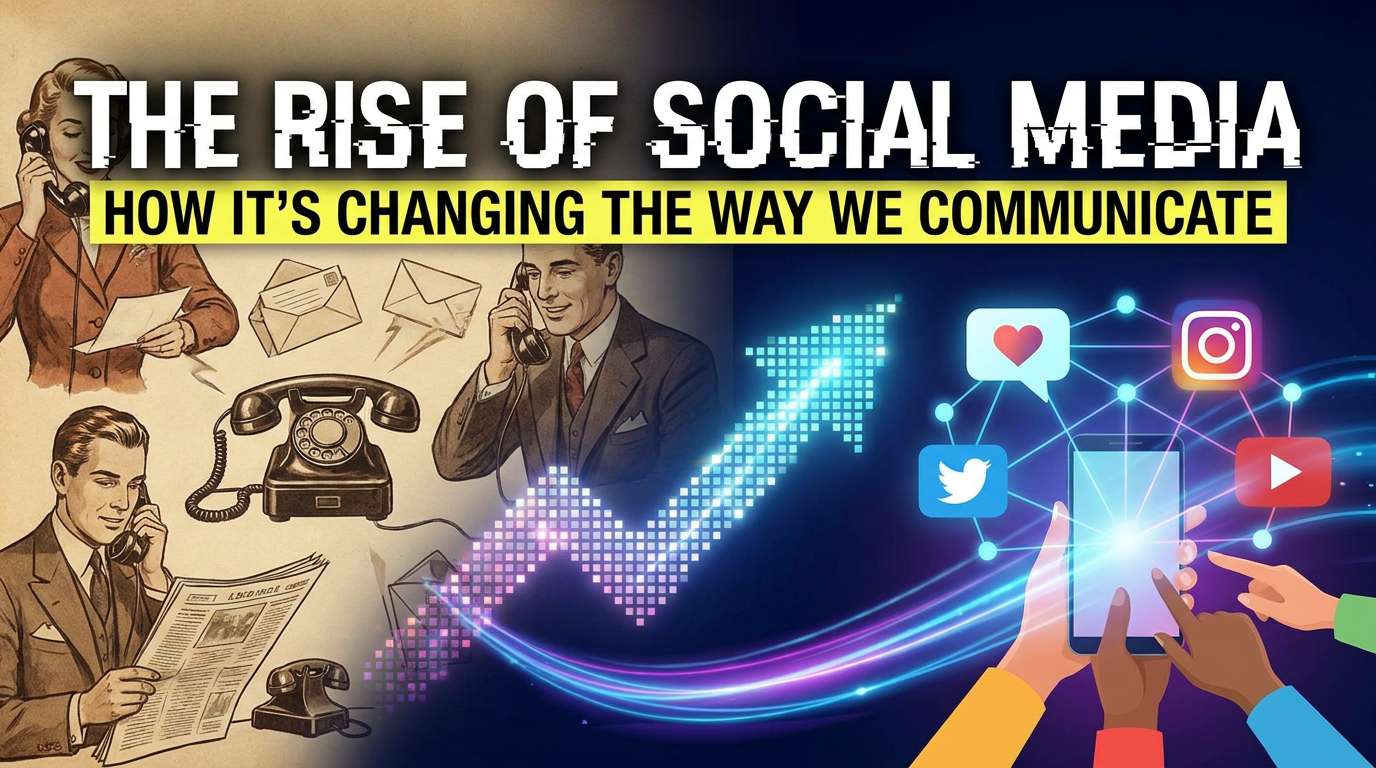
The Rise of Social Media: How It's Changing the Way We Communicate
Introduction
Not long ago, keeping in touch with friends and family meant writing letters, making phone calls, or meeting face to face. Today, a single message can reach thousands of people within seconds. Social media has transformed the way human beings communicate, share information, and build relationships.
Platforms such as Instagram, TikTok, X (formerly Twitter), and WhatsApp have become part of everyday life for billions of people around the world. For young people especially, social media is not just a tool — it is a way of life.
But what exactly has changed? And are these changes entirely positive? This article explores how social media is reshaping communication and what it means for our generation.
What Is Social Media?
Social media refers to digital platforms and applications that allow users to create, share, and interact with content and other people online.
Popular examples include:
- Instagram — for sharing photos and short videos.
- TikTok — for creating and watching short-form video content.
- X (Twitter) — for sharing opinions and news in real time.
- WhatsApp — for private messaging and group chats.
- YouTube — for watching and uploading long-form video content.
Each platform serves a different purpose, but all of them connect people across distances that once seemed impossible to bridge.
How Social Media Has Changed Communication
Before the internet, communication was slow and often limited by geography. A letter could take days or even weeks to arrive. International phone calls were expensive. News travelled slowly.
Social media has changed all of this in several important ways:
- Speed: Messages are delivered instantly, no matter where in the world the recipient is.
- Reach: A single post can be seen by millions of people within hours.
- Access: Anyone with a smartphone can participate in global conversations.
- Format: Communication now includes text, images, videos, voice notes, and live streams.
- Permanence: Digital messages can be stored, shared, and revisited long after they are sent.
The Benefits of Social Media Communication
Social media has brought many genuine benefits to the way people communicate.
Firstly, it has made it easier to maintain relationships across long distances. Families separated by migration, students studying abroad, and friends who have moved to different cities can stay connected daily through messages, photos, and video calls.
Secondly, social media has given ordinary people a voice. In the past, only journalists, politicians, and celebrities could reach large audiences. Today, a teenager with a smartphone can share ideas, start movements, and influence public opinion.
Thirdly, social media has made the spread of important information faster than ever before. During emergencies, health crises, and natural disasters, platforms like X and WhatsApp have helped save lives by circulating urgent updates rapidly.
The Drawbacks of Social Media Communication
Despite its advantages, social media also presents serious challenges.
One significant concern is the spread of misinformation. Because anyone can post anything online, false information often travels just as quickly — and sometimes faster — than the truth. This can cause panic, confusion, and real-world harm.
Another major issue is cyberbullying. The distance that social media provides can encourage people to say things online that they would never say in person. For young people, this can cause significant emotional damage and mental health difficulties.
Additionally, many experts argue that social media is reducing the quality of human connection. While we may have hundreds of online "friends," research suggests that excessive social media use can lead to feelings of loneliness, anxiety, and low self-esteem — particularly among teenagers.
Social Media and Language
Social media has also had a profound effect on the English language itself. New words, abbreviations, and expressions are constantly emerging from online culture.
Examples include:
- LOL — Laughing Out Loud.
- DM — Direct Message.
- Ghosting — suddenly stopping all communication with someone.
- Going viral — spreading rapidly across the internet.
- Influencer — someone who shapes the opinions of a large online audience.
While some welcome this evolution of language as creative and dynamic, others worry that informal digital communication is eroding formal writing skills among young people.
Is Social Media Making Us Better or Worse Communicators?
This is one of the most debated questions of our time. The answer is unlikely to be simple.
On one hand, social media encourages young people to write more than any previous generation. Crafting captions, composing tweets, and engaging in online discussions all require communication skills.
On the other hand, the informal, fast-paced nature of social media may be reducing our patience for deeper, more thoughtful communication. When we are used to expressing ourselves in a few words or emojis, writing a structured essay or holding a formal conversation can feel challenging.
The key may lie in balance — using social media as one tool among many, rather than allowing it to replace all other forms of communication.
Conclusion
Social media has undeniably transformed the way we communicate. It has made the world smaller, given people powerful new voices, and changed the very language we use. Yet it has also introduced new risks, from misinformation to the erosion of face-to-face connection.
As with most powerful tools, the impact of social media depends largely on how it is used. By approaching it thoughtfully and critically, young people can enjoy its benefits while avoiding its pitfalls — and become stronger, more informed communicators as a result.