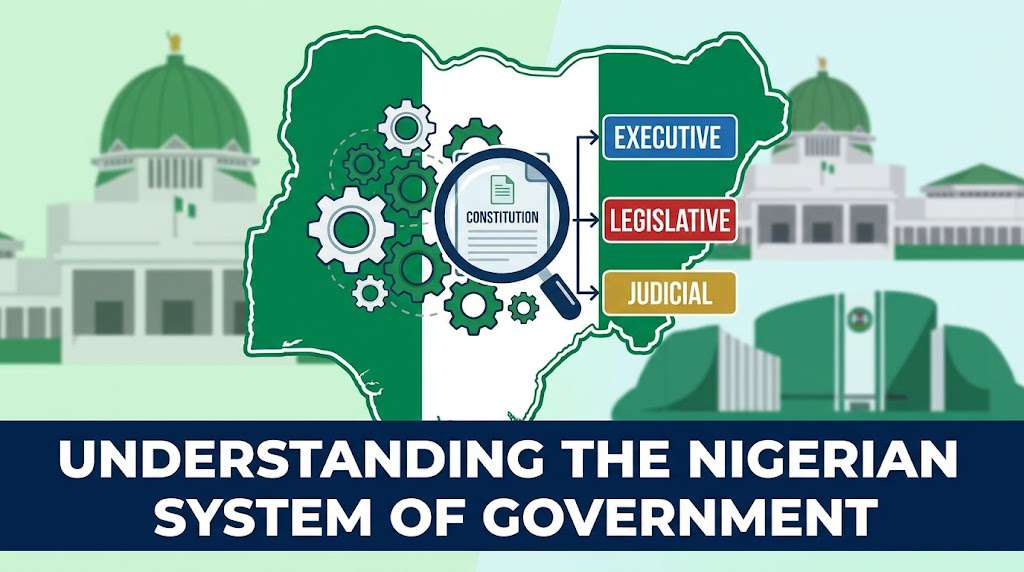
Understanding the Nigerian System of Government
Introduction
Government is an essential institution in every society. It provides leadership, maintains law and order, protects citizens, and promotes development. Without government, it would be difficult to organize society, enforce laws, and provide public services.
Nigeria operates a democratic system of government based on the principles of federalism, separation of powers, and the rule of law. The country's governmental structure is designed to ensure that power is shared among different institutions and levels of government.
Understanding how the Nigerian government works helps citizens participate effectively in governance and appreciate their rights and responsibilities.
What Is Government?
Government refers to the group of people and institutions responsible for making and enforcing laws, managing public affairs, and providing services for citizens within a state.
It is the machinery through which the will of the state is expressed and implemented.
Functions of Government
Governments perform numerous functions that contribute to the stability and development of society.
- Maintaining law and order.
- Protecting lives and property.
- Providing education and healthcare.
- Building roads and infrastructure.
- Defending the nation from external threats.
- Promoting economic development.
- Protecting citizens' rights.
- Collecting taxes and managing public funds.
Meaning of Democracy
Democracy is a system of government in which political power belongs to the people and is exercised directly or through elected representatives.
Nigeria practices representative democracy, where citizens elect leaders to govern on their behalf.
Features of Democracy
- Periodic elections.
- Rule of law.
- Fundamental human rights.
- Political participation.
- Majority rule with minority rights protected.
- Independent judiciary.
- Freedom of expression.
The Nigerian Constitution
The Constitution is the supreme law of Nigeria. It outlines the structure of government, defines the powers of institutions, and guarantees the rights of citizens.
All laws and government actions must conform to the provisions of the Constitution.
Federal System of Government
Nigeria operates a federal system of government.
Federalism is a system in which powers are constitutionally divided between the central government and regional units such as states.
Why Nigeria Practices Federalism
- Large population.
- Ethnic diversity.
- Cultural differences.
- Administrative convenience.
- Promotion of local development.
Levels of Government in Nigeria
Nigeria has three levels of government.
1. Federal Government
The Federal Government is responsible for national affairs affecting the entire country.
Responsibilities
- National defense.
- Foreign affairs.
- Immigration.
- Currency management.
- National security.
- International trade.
2. State Government
Nigeria consists of 36 states, each governed by an elected governor.
Responsibilities
- State roads.
- Secondary education.
- Healthcare services.
- Agricultural development.
- State security initiatives.
3. Local Government
Local governments are the closest level of government to the people.
Nigeria has 774 Local Government Areas (LGAs).
Responsibilities
- Primary education support.
- Local markets.
- Waste management.
- Birth and death registration.
- Community development projects.
The Three Arms of Government
The Nigerian government is divided into three arms to prevent concentration of power.
- Executive.
- Legislature.
- Judiciary.
1. The Executive Arm
The Executive is responsible for implementing laws and administering government policies.
Federal Executive
- President.
- Vice President.
- Ministers.
- Heads of government agencies.
Functions of the Executive
- Implementation of laws.
- Policy formulation.
- National security management.
- Budget implementation.
- Foreign relations.
2. The Legislative Arm
The Legislature is responsible for making laws.
The National Assembly
Nigeria's National Assembly consists of:
- Senate.
- House of Representatives.
Functions of the Legislature
- Making laws.
- Approving budgets.
- Representing citizens.
- Oversight of government activities.
- Amending the Constitution.
3. The Judiciary
The Judiciary interprets laws and settles disputes.
It ensures that justice is administered fairly and according to the Constitution.
Functions of the Judiciary
- Interpretation of laws.
- Protection of rights.
- Settlement of disputes.
- Administration of justice.
- Constitutional review.
Principle of Separation of Powers
Separation of powers means dividing governmental authority among the Executive, Legislature, and Judiciary.
This prevents abuse of power and promotes accountability.
Checks and Balances
Checks and balances ensure that no arm of government becomes too powerful.
Examples include:
- The Legislature approves budgets.
- The Judiciary can declare laws unconstitutional.
- The Executive can propose legislation.
The Electoral Process
Elections enable citizens to choose their representatives.
Importance of Elections
- Promote democracy.
- Ensure accountability.
- Provide peaceful leadership transitions.
- Allow citizens to participate in governance.
Political Parties
Political parties are organizations formed to contest elections and influence government policies.
They present candidates and policy programs to voters.
Rights of Nigerian Citizens
- Right to life.
- Freedom of expression.
- Freedom of association.
- Freedom of religion.
- Right to education.
- Right to fair hearing.
Responsibilities of Citizens
- Obey laws.
- Pay taxes.
- Respect national symbols.
- Vote during elections.
- Protect public property.
- Promote peace and unity.
Importance of Good Governance
- Promotes development.
- Reduces corruption.
- Improves public services.
- Encourages investment.
- Strengthens democracy.
Common Examination Questions
- Define government.
- Explain federalism.
- List the three arms of government.
- State five functions of the Executive.
- Differentiate between federal and state government.
- Explain separation of powers.
- List five rights of Nigerian citizens.
Summary
- Nigeria practices a democratic federal system of government.
- Government exists to provide leadership and public services.
- There are three levels of government: federal, state, and local.
- The three arms of government are the Executive, Legislature, and Judiciary.
- Separation of powers and checks and balances promote accountability.
- Citizens have both rights and responsibilities.
Conclusion
The Nigerian system of government is designed to promote democracy, accountability, and national development. Through the federal structure, separation of powers, and constitutional governance, power is shared among institutions and levels of government. Understanding how government operates enables citizens to participate actively in democratic processes and contribute positively to national growth and development.